Seven Common Mistakes First-Time Rural Walkers in Italy Make
Most first rural walking trips in Italy go wrong in small, fixable ways. Not dramatically — nobody is rescued from a ridge because they packed a third pair of trousers — but enough to turn a good day into a long one. The patterns repeat: the rucksack that gains weight every morning, the route that looked flat on the map, the village where everything shut at half past twelve, the water fountain that ran dry in September. None of these are exotic problems. All of them are easier to solve before you go than at four in the afternoon on a stony track with the sun on your neck. Here are the seven errors that come up most often, and what to do instead.
1. Packing for a holiday instead of for a walk
A suitcase has a car boot behind it. A rucksack has your shoulders. This is the single most common mistake, and the one people notice by day three, when the "just in case" items have become a daily tax.
Try this: lay everything out on the bed, then remove a third of it. You need one set of walking clothes, one set for the evening, and a warm layer. Rural guesthouses and agriturismi will usually let you rinse a shirt, and a small bottle of travel detergent plus a length of cord for a washing line covers a week. Walking poles are worth their weight; a folding chair is not.
If you are base-camping or staying in one town for several nights, ask whether you can leave a bag behind while you walk a section. Many small hotels will hold one. It is a far better solution than carrying a laptop across the Apennines.
2. Measuring the day in kilometres rather than in climbing
Fifteen flat kilometres along a valley floor and fifteen kilometres with seven hundred metres of ascent are two different days, and only one of them leaves you able to eat dinner. New walkers read a route sheet, see a number, and assume it means what it means at home.
What to look at instead
- Total ascent, not distance. A rough working rule: add about an hour for every five hundred metres of climbing on top of your flat-land time.
- Surface. Stony mule tracks, loose gravel, and clay that holds water after rain all slow you down considerably. So does a path that has not been cut since spring.
- Descent. Long descents are slower than they look and harder on knees than the climb. If a day ends with six hundred metres of downhill, plan for it.
Be honest about your pace, too. The one printed in guidebooks is a fit adult's pace on a good day, with stops excluded. If you like stopping to look at things — and in rural Italy you will — add the time back in.
3. Treating the siesta as a rumour
In much of rural Italy the middle of the day closes: shops shut, kitchens stop serving, and small bars pull down the shutters. Exact hours vary by town and season, but the pattern is consistent enough to plan around. Sunday and mid-August are their own category, with more closures and less forgiveness.
What catches people out is arriving at one o'clock in a village of four hundred people, hungry, having assumed there would be a bar. There may be one; it may be shut until four; the nearest alternative may be eight kilometres away.
The fix is a rhythm rather than a rule. Walk early, arrive by early afternoon, eat lunch before the kitchen closes, rest through the heat, and walk again in the late afternoon if the day is long. Buy bread, cheese and fruit in the morning while things are open, and carry it. Learn the local closing day — often a weekday, not Sunday — and check it before you plan a resupply.
4. Assuming water, food and a bed will turn up
Rural Italy is covered in villages, which can give a false sense of security. Many of them have no shop, no bar, and a fountain that runs seasonally or has been turned off. A hamlet with eight residents does not have a room for you.
Carry more water than feels necessary, especially in heat: a litre and a half is a reasonable baseline for a half day, and more when it is hot or the route is exposed. Refill whenever you pass a working fountain rather than when you run out.
For beds, book ahead in spring and autumn, at weekends, and anywhere near a known pilgrimage route or coastal trail. Call rather than email if you can — small places answer the phone. And have a plan B for the last two kilometres of the day, because the one place you did not book is always the one that turns out to be full.
5. Trusting a phone signal and a screenshot of the map
Italian trails are often marked with red and white stripes painted on rocks and trees. Where they exist, they are excellent. Where they do not — a junction in a chestnut wood, a forestry track that forks three ways — a screenshot will not help you.
Download an offline map of the whole area before you leave, not just the day's route. Carry a paper map if the route is at all remote, and know how to read it. A GPX track from someone else's walk is a useful guide and a terrible authority: paths get rerouted, overgrown, or blocked by a fence that is new this year.
Also accept that a "sentiero" may be faint. If the stripes vanish, look for a gap in the vegetation, a worn line in the grass, or a cairn. If you have not seen a marker for fifteen minutes on a path that should be marked, go back to the last one. Walking forward hoping the trail will reappear is how short afternoons become long ones.
6. Breaking in the route, not the boots
New boots a week before departure, worn for the first time on a seven-hour day, is the classic way to lose three days of a walking trip. Feet do not negotiate.
Buy boots months in advance if you can, and wear them on shorter walks, including some on hard surfaces, so they flex and you learn where they rub. Bring a small blister kit: a dressing, tape, and something to reduce friction. The moment you feel a hot spot, stop, take off the boot, and deal with it. Two minutes at the time of the hot spot beats a week of limping.
Two pairs of thin socks often work better than one thick pair, and taking boots and socks off during a lunch stop does more for your feet than most people expect. If you have existing foot problems, circulation issues, or take medication that affects your feet, get advice from a qualified professional before you go rather than pushing through.
7. Walking the middle of the day and ignoring the sky
The heat in an Italian summer is not a background detail; it is the main variable. Starting at half past six and finishing by one is not purism, it is the difference between a pleasant walk and a slog. If you are walking in July or August, build the day around the early hours and keep the afternoon for shade, a book and a long lunch.
Watch the sky, particularly in the mountains. Afternoon storms in the Apennines and the Alps are a regular summer feature, and an exposed ridge is a bad place to be when one arrives. If cloud is building through the morning, start earlier or choose a lower route. Rain also changes the ground: clay tracks become slippery and slow, and streams that were easy in the morning can be awkward by evening.
The night before: a short check that saves a long day
Ten minutes with the map and the day's notes does more than any gadget. Confirm tomorrow's distance and ascent, mark the water points and the one place you could stop for food, and note the closing day of anything you are relying on. Check the weather forecast. Put the map, a headtorch and a litre of water where you can reach them without unpacking. Then sleep.
Most of these mistakes come from carrying assumptions over from other kinds of travel. Rural walking in Italy rewards a slower, more deliberate kind of planning: fewer kilometres, earlier starts, a little more food in the bag, and a willingness to sit out the afternoon. Do that, and the trip stops being a test of endurance and becomes what you came for.
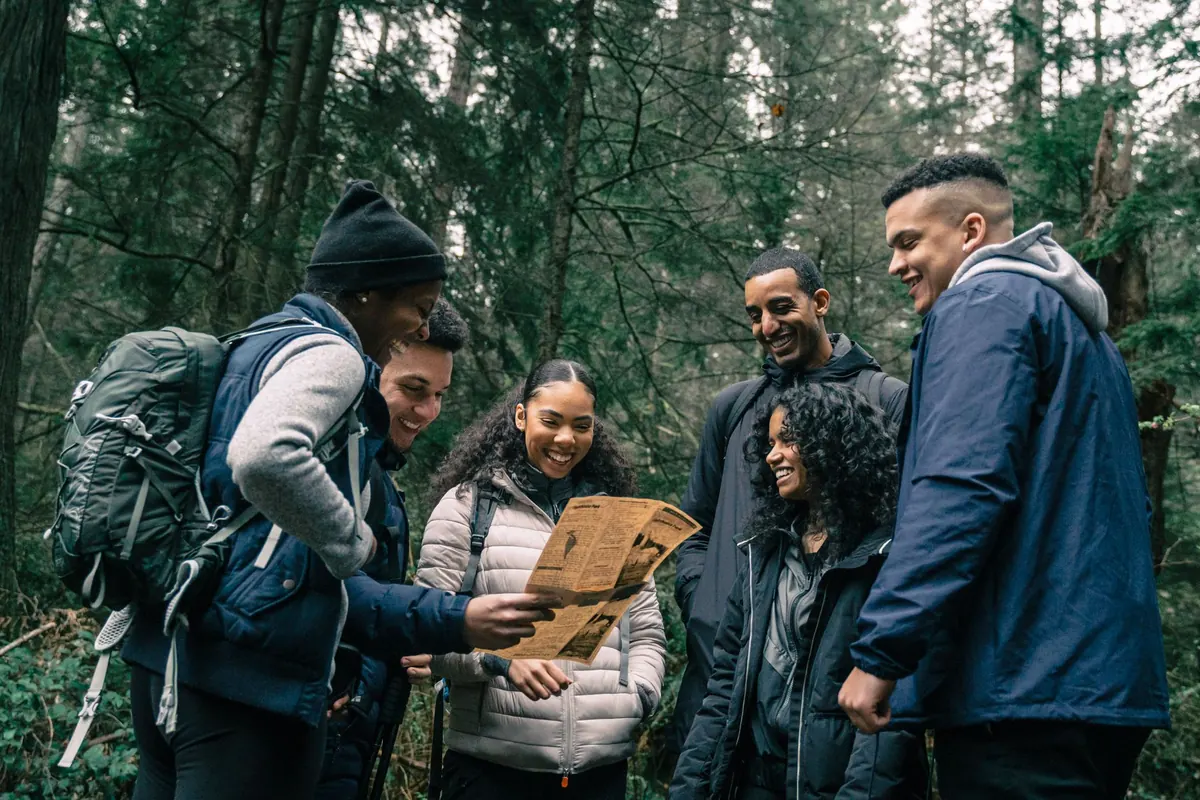
Photo: PNW Production / Pexels