A Beginner’s Guide to Rural Church Etiquette and Local Customs in Italy
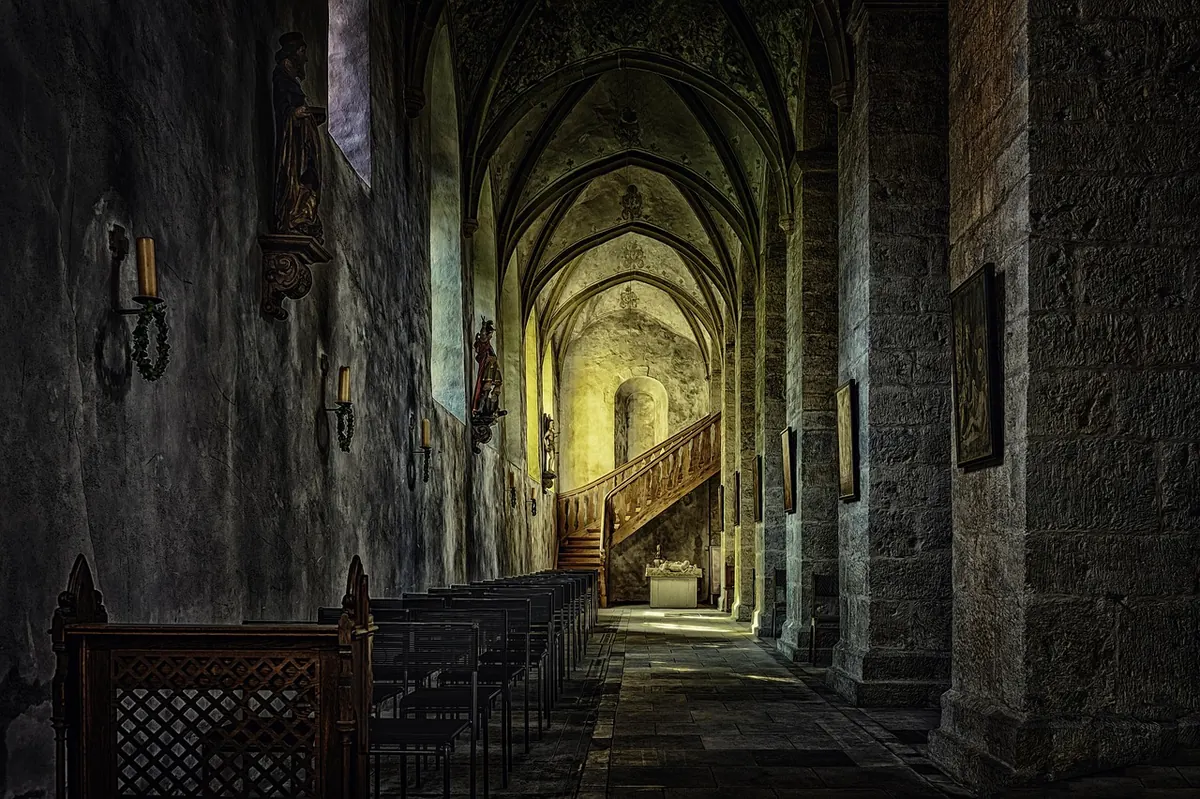
You round a bend on a gravel road somewhere south of Perugia, and there it is: a small stone church with a bell tower, a cypress or two, and a view that would be famous if anyone could find it. The door is open. You want to look inside, but something stops you — the feeling that you're about to walk into someone's living room rather than a museum. That instinct is worth listening to. In the countryside, a church is rarely just a monument. It is where the same families have baptised, married, and buried their own for generations, and where a handful of elderly women still polish the brass on Saturday mornings.
The good news is that the rules are simple and mostly about common sense. Learn them once and you can walk into almost any village church in Italy with confidence — and, just as usefully, into the bar on the piazza afterwards.
Dress for the door, not the weather
Italy is not a formal country in daily life, but churches are the exception. Rural parishes tend to be more conservative than city ones, not less — a small community notices visitors, and a small community also has long memories.
The working rule: shoulders and knees covered, for everyone, in every season. That means no vests, no spaghetti straps, no short shorts, and no beachwear, even if you have just come off a trail and the church is the only shade for miles. A light scarf in your daypack solves most problems: drape it over bare shoulders and you are fine. Men should remove hats. Sunglasses come off at the door.
You do not need to be smart. Walking boots and dusty trousers are perfectly acceptable; nobody expects a visitor to carry a change of clothes up a hill. What is noticed is whether you made an effort. If you are turned away, it will almost never be with anger — more likely a gentle hand on your arm and a word about decoro, decency.
A note on the very small places
Some rural churches — especially the tiny chapels in hamlets of a dozen houses — keep irregular hours or open only for Mass. If the door is locked, don't rattle it. Ask at the village shop or the nearest bar; someone will know who holds the key, and often that person will be happy to open up for you. This is one of the quiet pleasures of rural travel. Accept the offer, say thank you, and leave a small donation.
Silence, and how to break it
Inside, keep your voice low and your phone away. Not on silent — away. If you need it for a photograph, take the picture quickly and put it back. Flash is almost always unwelcome, and in many churches it is expressly forbidden.
Check before you photograph people. If a service is in progress, do not photograph at all, and do not walk in front of the altar to get a better angle. If someone is praying, leave them alone. These are not abstract courtesies; in a village church you may be the only visitor that week, and your behaviour will be the story told about visitors for some time.
A few practical habits go a long way:
- Pause just inside the door for a moment. It signals respect and gives your eyes time to adjust.
- Walk down the side aisles rather than the central one if people are seated.
- Sit or kneel only where it is clearly fine to do so; some pews are reserved, though signage is rare.
- If Mass is beginning, either stay and participate quietly or slip out before it starts. Do not wander during the service.
- Keep children close and quiet, and take a restless toddler outside rather than letting them run.
Donations, candles, and the honesty of small money
Entry to almost all rural churches is free. That does not mean your visit costs nothing to the parish. Heating, insurance, roof repairs, and the electricity for that single bulb over the altar all come from somewhere, and in small communities that somewhere is often the collection plate and a box by the door.
A donation of a euro or two is entirely normal and quietly appreciated. There is usually a slot box for offerte, sometimes with a small printed notice about restoration work. If you light a candle, pay for the candle — the box beside the rack is not decorative. Do not put coins in the poor box if you have not read what it is for; some are for specific funds.
What you should not do is treat the church as a free attraction while spending forty euros on lunch. If you have taken a printed leaflet, consider giving something back. And if someone opens a locked chapel especially for you, a contribution of a few euros is the right gesture, offered without fuss.
Greetings, gestures, and a handful of phrases
Outside the church, the etiquette shifts. Village life runs on acknowledgement: say good morning to people you pass, even strangers. A nod is acceptable; ignoring someone is not. Italians in small places will often greet you first — answer, and smile.
A few words will carry you a long way. You don't need to be fluent; you need to be willing.
- Buongiorno — good morning, used until mid-afternoon.
- Buonasera — good evening, from late afternoon onward.
- Permesso? — may I? Said when entering a shop, squeezing past, or stepping into a doorway.
- È aperta? — is it open? Useful for churches and chapels.
- Posso visitare? — may I visit?
- Grazie and prego — thank you, and you're welcome (also "after you," and "go ahead").
- Scusi — excuse me, for getting attention politely.
- Buona giornata — have a good day, on leaving.
Use lei with strangers older than you — the polite form — and let them invite you to use tu. Handshakes are standard on introduction. Don't overdo cheek kisses with people you have just met; follow their lead. If you are invited for coffee after Mass, accept. It is not small talk; in a hamlet of eighty residents, it is the beginning of being trusted.
Dress and manners in the community
The same modesty that works in church works in the village: you will be treated better in a bar or a shop in a clean shirt than in swimwear. Ask before photographing people, their houses, or their livestock. In villages hit by earthquakes or depopulation, do not treat damage as scenery; ask whether it is all right to take pictures, and accept a no gracefully.
When the church is the only place open
In many small villages the parish church doubles as the social hub: concerts, food festivals, memorials, and the only public toilet for miles. You are welcome at these events, and turning up is usually the fastest way to be included. Bring a little cash for the raffle, buy something at the stall, and stay for the speeches even if you don't follow every word.
One last thing: if you are travelling in a group, split up before you go in. Twelve people talking at the door is an invasion; two people slipping in quietly is a visit. And if a caretaker is sweeping the steps, greet them. Say good morning, ask if you may go in. That single exchange is often the whole of rural etiquette in miniature.
Before you go: a five-point checklist
Carry a scarf and wear trousers or a skirt that reaches the knee. Leave the phone in your bag. Have a two-euro coin ready for the donation box. Learn buongiorno, grazie, and permesso. And if the door is locked, walk to the nearest bar and ask — someone will help you, and you may end up with an espresso and a story you did not expect. Treat these places as though you were visiting someone's home, because in a very real sense, you are.
Photo: Tama66 / Pixabay